BIOPHYSICS + ENGINEERING
生物物理 + 工学
Antimicrobial Peptides: A Novel Strategy to Combat Resistant Pathogens
Drug-resistant bacteria that no longer respond to antibiotics have become a global medical crisis. One key to overcoming this challenge lies in antimicrobial peptides (AMPs)—natural antibiotics produced by our immune system. Because AMPs attack the lipid membranes of bacteria rather than specific proteins, it is difficult for bacteria to develop resistance against them. However, AMPs can also damage our own cells, and this lack of selectivity has long been the bottleneck for their use as medicines.
We focus on a unique phenomenon that emerges only when different peptides are combined: the double cooperative effect. When two human AMPs, LL-37 and HNP1, are mixed, they kill bacteria more efficiently while becoming less toxic to human cells. Combining fluorescence microscopy, FRET, NMR and molecular dynamics simulations, we found that the secret lies in how the two peptides assemble. LL-37 and HNP1 stick together through hydrophobic interactions and form aggregates that keep the peptides “switched off.” Anionic lipids, which are abundant in bacterial membranes, pull the peptides out of these aggregates and disperse them into the membrane, switching their activity back on. As a result, the same mixture destroys bacterial membranes while protecting ours (Angew. Chem. Int. Ed. 2026). In living cells, this protection appears only at a specific mixing ratio, where the two peptides cancel out each other’s toxicity: HNP1 suppresses necrosis induced by LL-37, while LL-37 reduces apoptosis induced by HNP1 (JACS Au 2026).
By harnessing this aggregation-based principle, we aim to develop next-generation therapeutics capable of defeating resistant bacteria without harming the patient.


薬剤耐性菌に挑む、抗菌ペプチドの新戦略
抗菌薬が効かない“耐性菌”は、今や世界的な医療危機となっています。これに対抗する鍵のひとつが、私たちの免疫が作り出す天然の抗生物質「抗菌ペプチド」です。抗菌ペプチドは細菌の特定のタンパク質ではなく、細胞膜(脂質膜)そのものを標的とするため、耐性菌が生まれにくいという大きな利点があります。その一方で、ヒトの細胞膜まで傷つけてしまう「選択性の低さ」が、薬としての実用化を阻む壁となってきました。
私たちは、異なる種類のペプチドを組み合わせたときにのみ現れる「ダブル協奏効果」に注目しています。ヒトの抗菌ペプチドLL-37とHNP1を混ぜると、細菌を殺す力は高まる一方で、ヒトの細胞への毒性はむしろ下がるのです。蛍光顕微鏡、FRET、NMR、分子動力学シミュレーションを組み合わせた解析により、その秘密が二つのペプチドの「集まり方」にあることを突き止めました。LL-37とHNP1は疎水性相互作用によって互いにくっつき、凝集体をつくることで機能を「オフ」にしています。ところが、細菌の膜に多く含まれる負電荷をもつ脂質に出会うと、ペプチドは凝集体からほどけて膜の中に散らばり、機能が再び「オン」になります。こうして同じ混合物が、細菌の膜は壊し、ヒトの細胞膜は守るという使い分けを実現しているのです(Angew. Chem. Int. Ed. 2026)。さらに生きた細胞を用いた実験では、この毒性の打ち消し合いが特定の混合比でのみ起こり、HNP1はLL-37による細胞の壊死(ネクローシス)を、LL-37はHNP1によるアポトーシスを、互いに抑え合っていることも明らかにしました(JACS Au 2026)。
この「凝集状態」という新しい設計原理を応用することで、患者の体にやさしく、耐性菌に打ち勝つ次世代の抗菌薬開発に挑んでいます。
The World of Mechanochromic Materials: Visualizing Invisible Forces with Color
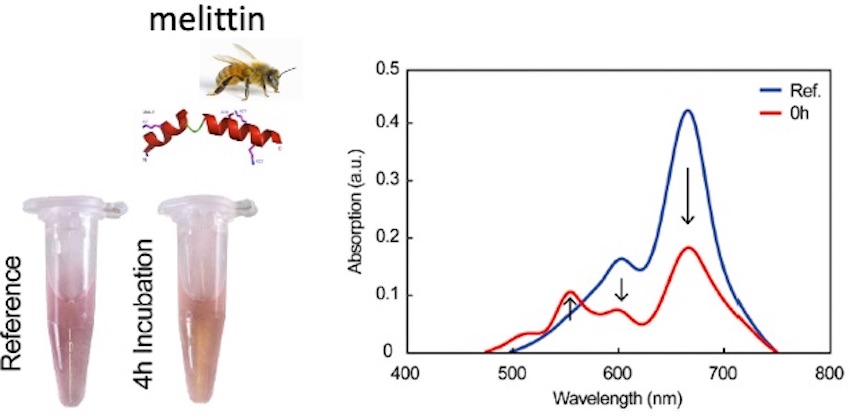
Polydiacetylene (PDA) is a “chameleon molecule” that instantly changes its color or fluorescence in response to external stimuli such as force, temperature, or molecular binding. At the Sugihara Lab, we push this unique property to its limits, creating innovative sensors that can visualize friction and pressure, as well as simple diagnostic tools for detecting infectious diseases.
Although PDA has been studied for over 50 years, how it responds to forces at the nanoscale had remained unclear. Using our original friction force microscopy combined with fluorescence imaging, we showed that PDA responds only to lateral (shear) forces, and that its mechanochromism and thermochromism are two sides of the same coin—work and heat simply provide the same transition energy in different forms (Nano Letters 2020). We further discovered that PDA is most sensitive when force is applied perpendicular to its polymer backbones, because a “domino effect” propagates a point load hundreds of nanometers along the chains. By aligning PDA crystals accordingly, we increased the sensitivity of a stretchable, wearable force sensor by up to 14-fold (Nano Letters 2025).
These fundamental insights lead directly to applications. Our “chameleon packaging” records damage during transport as color, which can be quantitatively converted into pressure simply by taking a photo with a smartphone app (ACS Sensors 2024). By reading the full color spectrum of PDA sensors with hyperspectral imaging and analyzing it with deep learning, we identified seven antimicrobial peptides at two concentrations with about 97% accuracy—a distinction that conventional two-color readouts could not make at all (Angew. Chem. Int. Ed. 2026).
PDA technology, which conveys invisible phenomena through vivid color changes, is paving the way for the next generation of intuitive sensing.



見えない力を色で可視化するメカノクロミック材料の世界
ポリジアセチレン(PDA)は、力や温度、分子の結合といった刺激で一瞬にして色や光を変える“カメレオン分子”です。杉原研究室では、この特性を極限まで引き出し、摩擦や圧力を「見える化」する革新的センサーや、感染症を簡便に検出できるバイオセンサーへと応用しています。
PDAは50年以上研究されてきた材料ですが、ナノスケールでどのように力に反応するのかは謎のままでした。私たちは独自に開発した摩擦力顕微鏡と蛍光顕微鏡を組み合わせた装置を用いて、PDAが表面に沿った横方向の力(せん断力)にのみ反応すること、そして力による変色(メカノクロミズム)と熱による変色(サーモクロミズム)が、同じ転移エネルギーを「仕事」と「熱」という別の形で与えたものであることを明らかにしました(Nano Letters 2020)。さらに、PDAの高分子鎖に対して垂直に力を加えたときに感度が最大になることを発見しました。一点に加わった力が、ドミノ倒しのように鎖に沿って数百ナノメートル先まで伝わるためです。この原理を利用してPDA結晶の向きをそろえることで、伸縮可能なウェアラブル力センサーの感度を最大14倍に高めることに成功しました(Nano Letters 2025)。
こうした基礎的な理解は、実用的な応用にも直結しています。輸送中に荷物が受けたダメージを色として記録する「カメレオン包装」では、スマートフォンアプリで写真を撮るだけで、受けた圧力を定量的に読み取ることができます(ACS Sensors 2024)。また、PDAセンサーの色の変化を全波長のスペクトルとしてハイパースペクトルイメージングで捉え、深層学習で解析することで、7種類の抗菌ペプチドを2つの濃度で約97%の精度で識別することにも成功しました。これは従来の2色による評価では全く区別できなかった違いです(Angew. Chem. Int. Ed. 2026)。
目に見えない現象を色で直感的に伝えるPDA技術は、次世代センシングの未来を切り拓きます。
lipid self-assembly
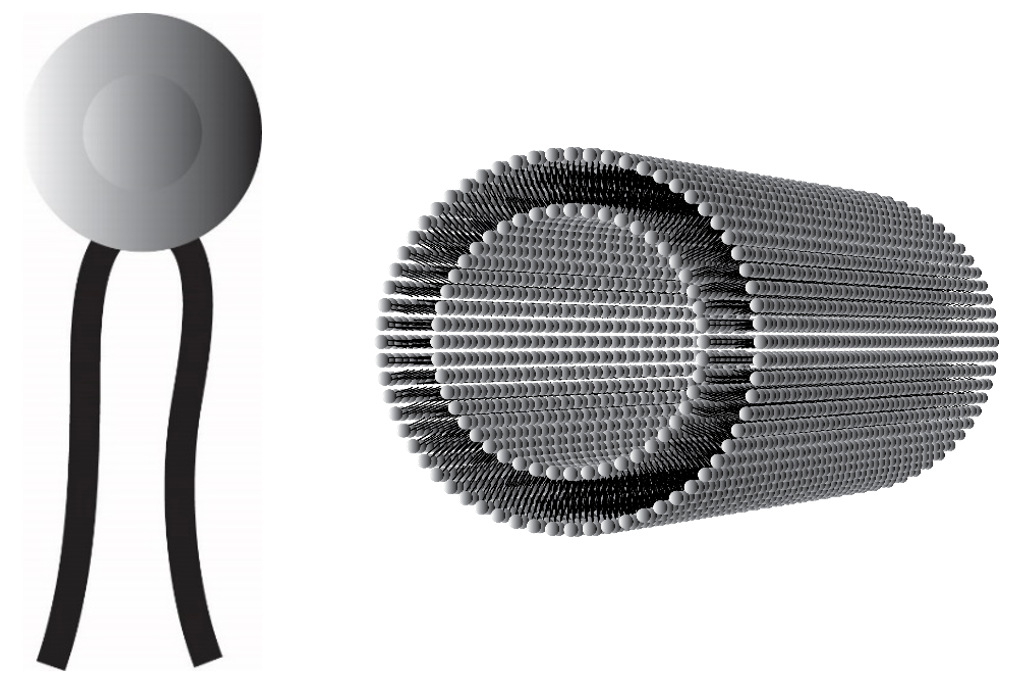
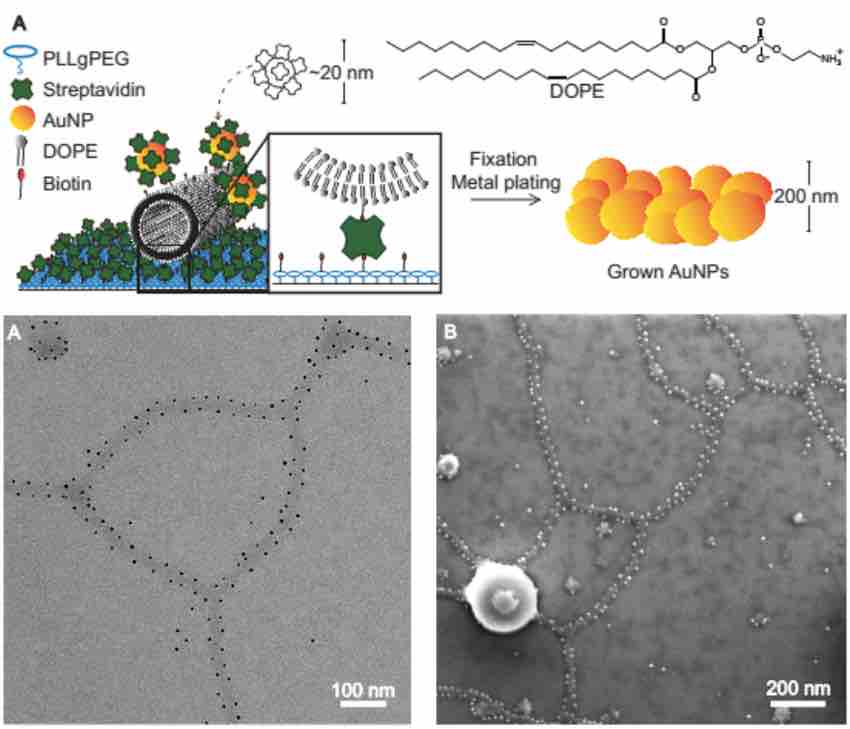
Self-assembly created the origin of life. We are interested in how different lipids self-assemble into a variety of shapes and what functions they have.
脂質の自己組織化
生命の起源は自己組織化から始まりました。私たちは脂質がどのように自己組織化し様々な形と機能を作り出しているのかを調べています。
mask recharger
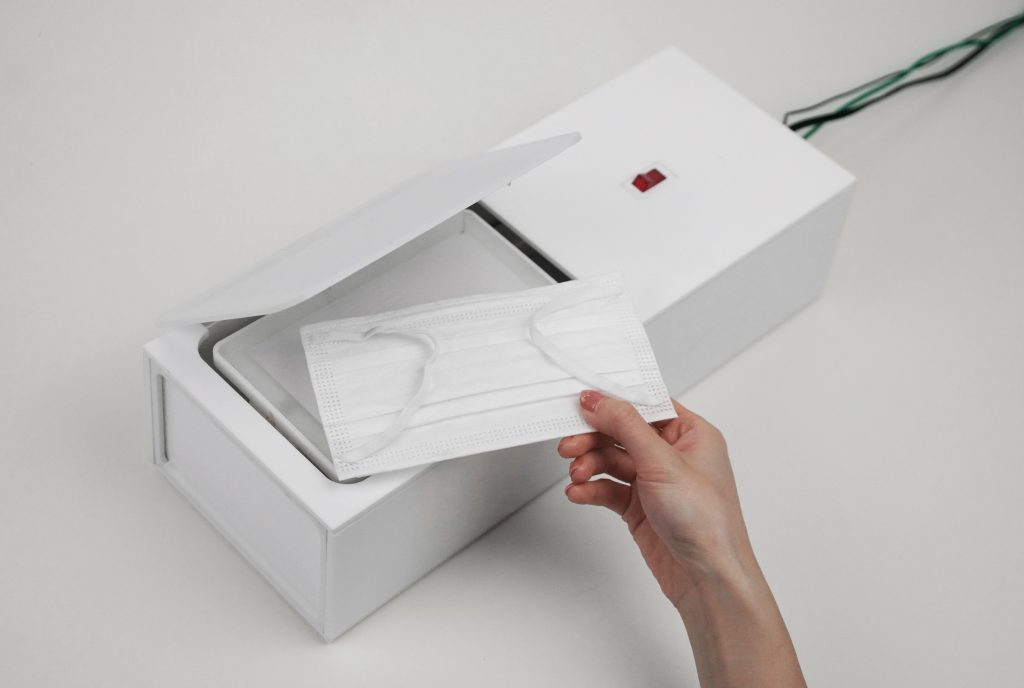
N95 or surgical masks used in the current COVID-19 pandemic filter aerosols by the static electricity of polypropylene mesh, thus are one-time use only due to the loss of the static electricity via humid breath. We are developing a way to recharge these masks for recycling.
マスク・リチャージャー
新型コロナ感染症で使用されているN95やサージカルマスクはポリプロピレンと呼ばれる不織布の帯電によりエアロゾルをフィルターします。湿気のある息に数時間さらされることで電荷を失うため通常は使い捨てとなります。私たちはこれらのマスクをリチャージすることで再利用ができないか研究しています。